Photos courtesy of the Office of Governor Wes Moore
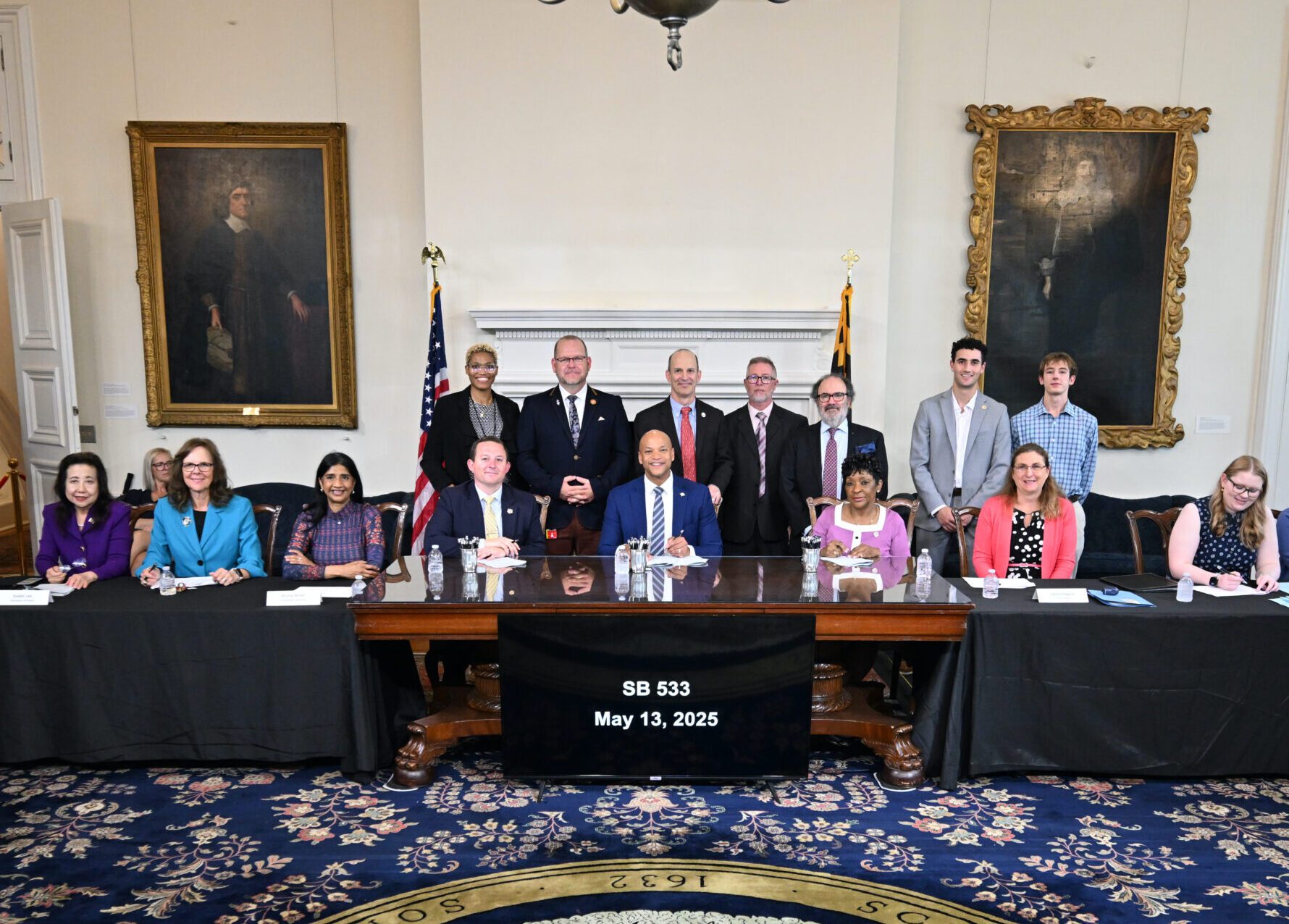
Governor Wes Moore, joined by Senate President Bill Ferguson and Speaker of the House Adrienne Jones, recently presided over the fourth bill signing ceremony of 2025. There were numerous bills signed on Tuesday, including HB 191/SB 40, SB 533, and SB326/HB309, bills which Manis, Canning & Associates lobbied in support of on behalf of our clients – Towing & Recovery Association of Maryland and the Maryland Police Chiefs and Sheriffs Association. The Governor also signed a key bill for the Administration’s legislative and economic agenda, The Chesapeake Bay Legacy Act, aimed at improving the health of the Chesapeake Bay. Additional legislation establishing a grant within the Maryland Department of Health to assist with abortion care clinical services and a bill ensuring that Marylander’s who need language assistance have equal access to public services were also signed by the Governor on Tuesday.
Regarding The Chesapeake Bay Legacy Act, Governor Moore said “We have a responsibility to hand over the state to the next generation better than we found it. That’s not just a moral priority – that’s an economic imperative.” He went on to say that “The Chesapeake Bay Legacy Act will uplift every sector of our Bay economy, from agriculture to aquaculture. Together, we will protect and preserve our natural heirlooms and drive economic growth. Those missions aren’t in conflict, they’re in concert.”
Key Legislation signed on Tuesday includes:
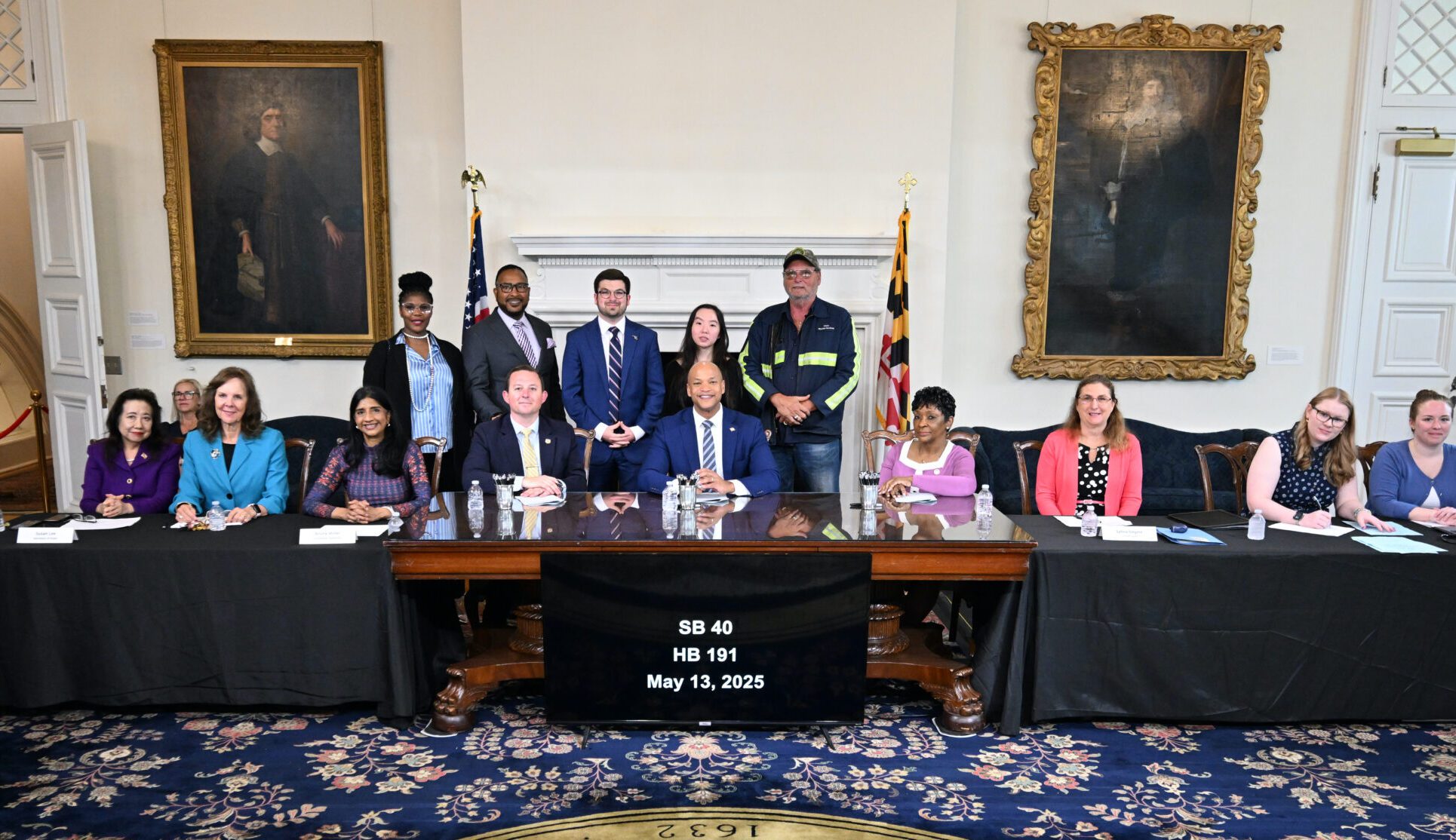
HB 191/SB 40 – Vehicle Laws – Towed, Removed, or Abandoned Vehicles – Electronic Notice to Owner
HB 191 allows towing companies and police departments in Maryland to send notices to vehicle owners about towed, removed, or abandoned vehicles through the Motor Vehicle Administration (MVA). If an email address is on file with the MVA, the notice may be sent electronically before a follow-up by certified mail if there’s no response within 7 days. The bill also authorizes insurers and secured parties to receive electronic notices if they consent in writing or by electronic communications.
SB 533 – Public Safety – Police Accountability – Time Limit for Filing Administrative Charges
This legislation requires that investigations by law enforcement into alleged misconduct involving the public be completed, reviewed by an Administrative Charging Committee (ACC), and a disposition delivered by the ACC within 395 days after the filing of the complaint by a member of the public. If the misconduct is tied to a potential criminal investigation, the deadline to file administrative charges is one year and one day after prosecutors decline charges, the criminal cases are resolved, or it’s determined no criminal activity occurred.
SB 326/HB309 – Public Safety – Law Enforcement Agencies – Peer Support Programs
The Peer Support Programs allow law enforcement to have access to high quality peer support as an early intervention means to address many mental health and occupational concerns that law enforcement officers face on a daily basis. SB 326/HB 309 provides a confidentiality requirement for communication between law enforcement officers and their peer support counselling specialists, which was not previously mandated.
HB 506 – Chesapeake Bay Legacy Act
The Chesapeake Bay Legacy Act updates Maryland’s water quality and monitoring systems, supports healthier farmland and ecosystems through the promotion of regenerative agriculture, and simplifies the process for aquaculture leasing. The bill also reworks the state’s fisheries management program and introduces a more coordinated permitting approach to accelerate watershed restoration projects. Additionally, it creates the Leaders in Environmentally Engaged Farming Pilot Program, enabling the Maryland Department of Agriculture to acknowledge and further encourage sustainable land management practices.
HB 930 – Public Health Abortion Grant Program – Establishment
This legislation establishes a Public Health Abortion Grant Program and Fund, within the Maryland Department of Health, which streamlines access to abortion care clinical services primarily for individuals who are uninsured, without sufficient abortion coverage, or cannot safely use insurance due to privacy or communication concerns.
HB 1473 – Equal Access to Public Services for Individuals With Limited English Proficiency and Individuals With Disabilities
This bill builds upon current requirements for state agencies to ensure equitable access to government services for those with limited English proficiency or disabilities. The legislation directs the Governor’s Office of Immigrant Affairs and the Department of Disabilities to establish the Maryland Language Advisory Group, which will provide guidance and recommendations on the oversight, monitoring, investigation, and enforcement of laws related to ensuring equal access to public services for individuals requiring language support.