The $70.8 billion budget plan for fiscal year 2027, proposed by Governor Wes Moore, will address a projected $1.5 billion deficit without increasing taxes, but analysts are predicting that this may only be a short-term solution. According to a fiscal briefing by the Department of Legislative Services, Governor Moore’s budget plan may stabilize Maryland’s fiscal situation in the short term. Still, the state faces a looming deficit in the future.
“It improves the structural outlook, certainly for fiscal ’27 and ’28 as well,” Department of Legislative Services budget analyst David Romans said. “However, it does not make substantial progress for fiscal ’28 and beyond. So, we still face very substantial and challenging shortfalls in the out years that will likely be left to the next term to try to resolve.”

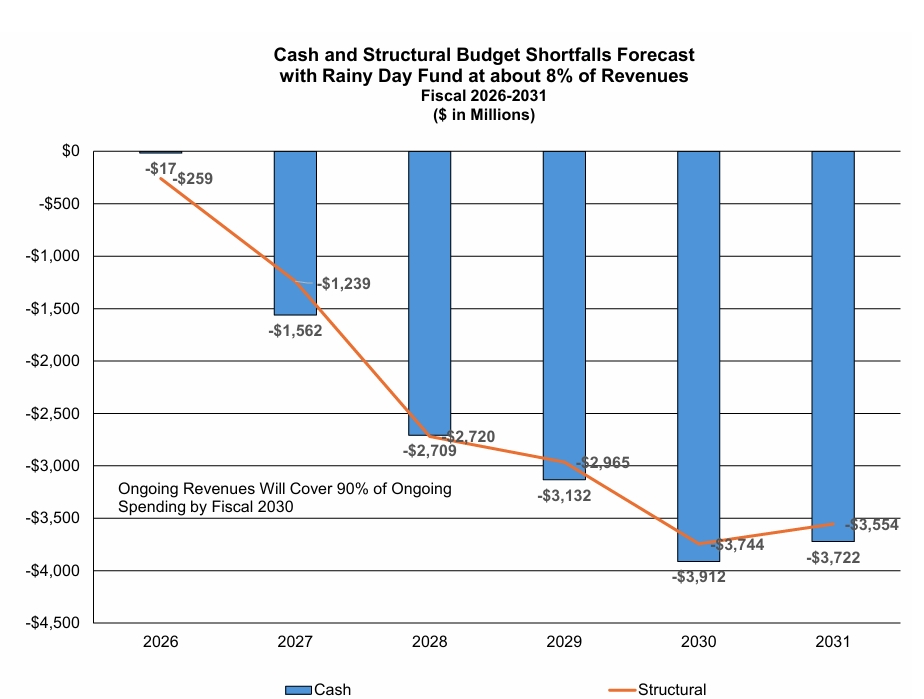
Projections indicate that the state is likely to face a budget shortfall of $2.3 billion in FY28, followed by an increase to approximately $3 billion by the end of FY29, and exceeding $4 billion by the end of FY31. Increasing costs related to employee salaries and benefits, teacher pensions, human services, and the implementation of the Blueprint for Maryland’s Future are among the factors affecting the worsening budget outlook.
While the governor’s proposal delivers short-term balance and avoids immediate tax increases, analysts and lawmakers agree it leaves difficult decisions for future budgets.
Maryland Matters – Moore’s budget fixes current deficit, but analysts pessimistic about future