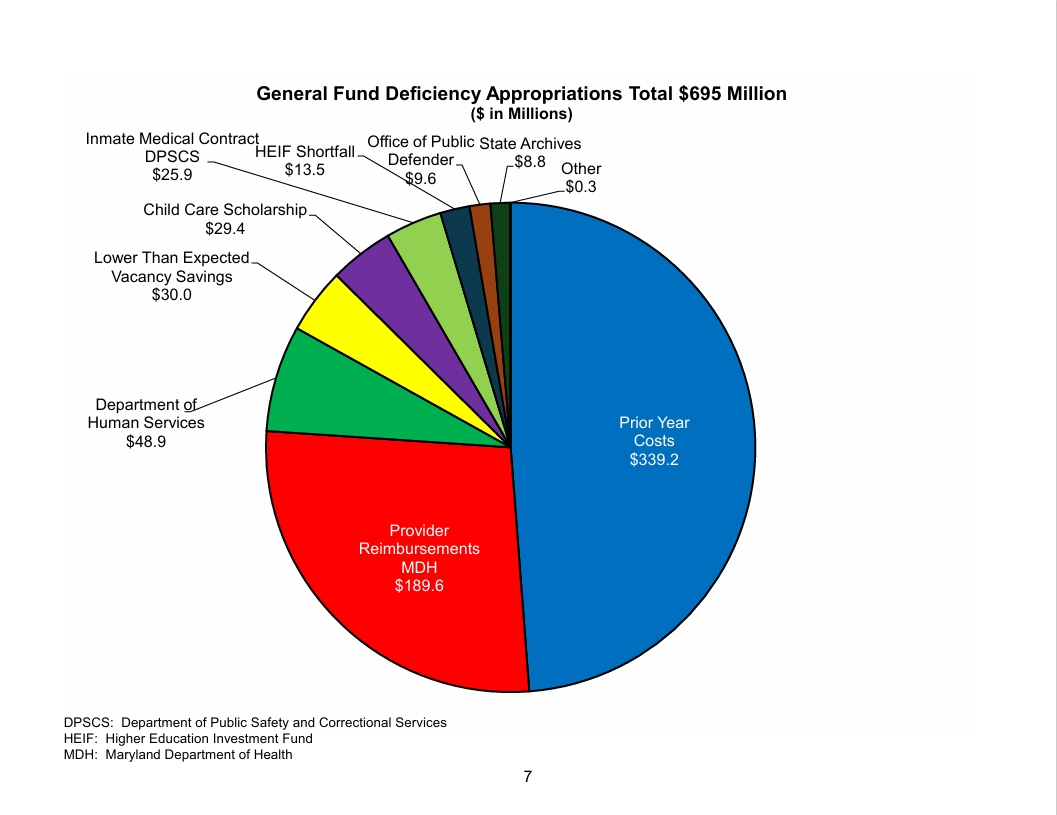
The Senate Budget and Taxation Committee approved a state budget proposal(SB 282) Friday that, if adopted by both chambers of the General Assembly, is projected to leave the state with a $250 million surplus at the close of the fiscal year.
The plan largely aligns with the roughly $70.8 billion budget proposal introduced in January by Governor Moore. According to Budget and Taxation Committee Chair Guzzone, overall spending levels remain close to the governor’s proposal, with the total budget around $70 billion and approximately $28 billion coming from the state’s General Fund.
The committee approved several funding increases, including $20 million for Maryland’s childcare scholarship program and $20 million for school mental health initiatives. The budget also allocates $16 million for the Senate’s economic growth agenda and maintains funding for key safety-net programs such as SNAP and Medicaid.
To balance the budget, the committee included a number of spending reductions and transfers. These include $10 million in cuts to the Maryland Judiciary, $2 million from the state’s biotechnology tax credit, and $1 million from the state’s information technology budget. In addition, about $233 million would be transferred from the Strategic Energy Investment Fund, which typically supports programs administered by the Maryland Energy Administration focused on energy affordability, climate initiatives, and job creation.
The budget also contains cost containment measures for the Developmental Disabilities Administration. The initial proposal by the governor was to cut $150 million; however, the Senate version reduces spending by $123 million, with $23 million restored via the General Fund.
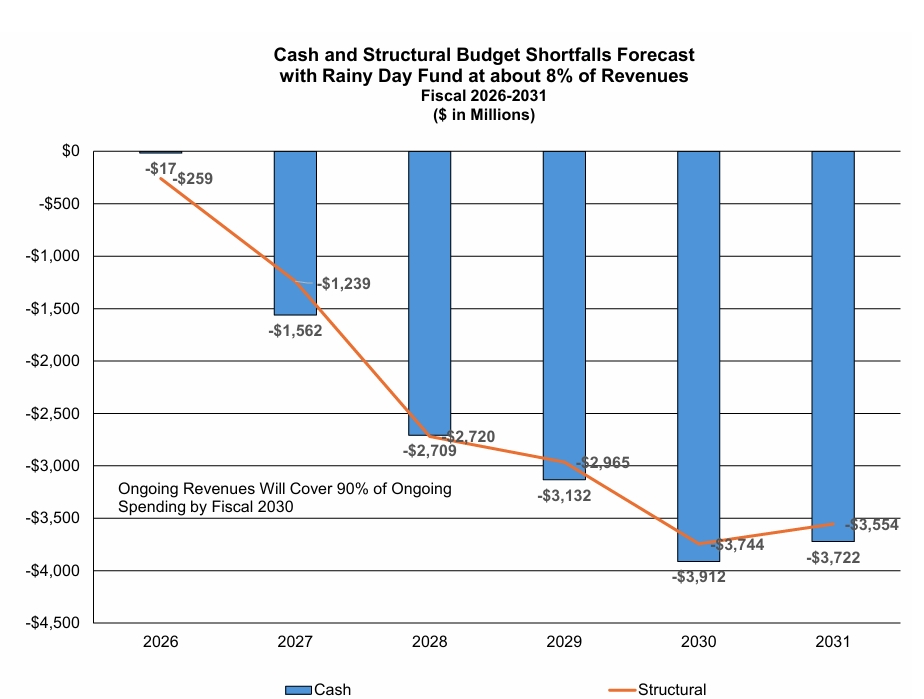
Chair Guzzone said the committee’s actions helped transform what began as a projected $1.4 billion structural deficit into a spending plan that maintains an 8% balance in the state’s Rainy Day Fund while ending the fiscal year with a projected surplus.
He emphasized “We don’t have a deficit. We never had a deficit. We never will have a deficit, and we have a surplus,” said Guzzone. “We have a surplus every year when we leave here.” “In reality, ‘deficit’ means spending what you don’t have,” he continued. “We don’t do that.”
The proposal will reach the full Senate floor in the coming days.
MD Senate committee advances budget, aspires to leave with $250M surplus
2026 – Decision Document – Senate Budget and Taxation – Full Committee
2026 – Additional Pages – Decision Document – Senate Budget and Taxation Full Committee
2026 – Budget Reconciliation and Financing Act Tally Sheet for the Senate
2026 – Report of the Capital Budget Subcommittee to the Senate Budget and Taxation Committee
2026 – Additional Page – Report of the Senate Education, Business, and Administration Subcommittee
2026 – Additional Pages – Report of the Senate Health and Human Services Subcommittee